Table of contents

.png)
How to connect a HiBob MCP with Claude Code (4 steps)
.png)


Developers building people ops automations or internal tooling that surfaces HR data have to manage HiBob's API authentication, scope endpoints correctly per use case, and write a new integration each time a workflow needs a different slice of employee data.
To help your developers query employee records, track time off, and surface org data more easily from the terminal, we'll show you how to connect HiBob with Merge Agent Handler's HiBob MCP server.
How it works
Merge Agent Handler connects Claude Code to the HiBob API through a single CLI setup.
You install the Merge CLI, authenticate once with your Merge Agent Handler account, and register the connection with one command.
Merge stores and manages HiBob credentials on your behalf, so you never expose API keys in your environment or rotate them manually when they change.
Here's the command that registers the connection:
Prerequisites
Before getting started, you'll need the following:
- A Merge Agent Handler account
- Claude Code installed (run
claude --versionto confirm) - pipx installed (run
pipx --versionto confirm, or install viapip install pipx) - A HiBob account with API access enabled (Service User credentials required for API key generation)
If you want to connect Merge Agent Handler's HiBob MCP with internal or customer-facing agentic products, you can follow the steps in our docs.
1. Install the Merge CLI
Run the following to install the Merge CLI: pipx install merge-api
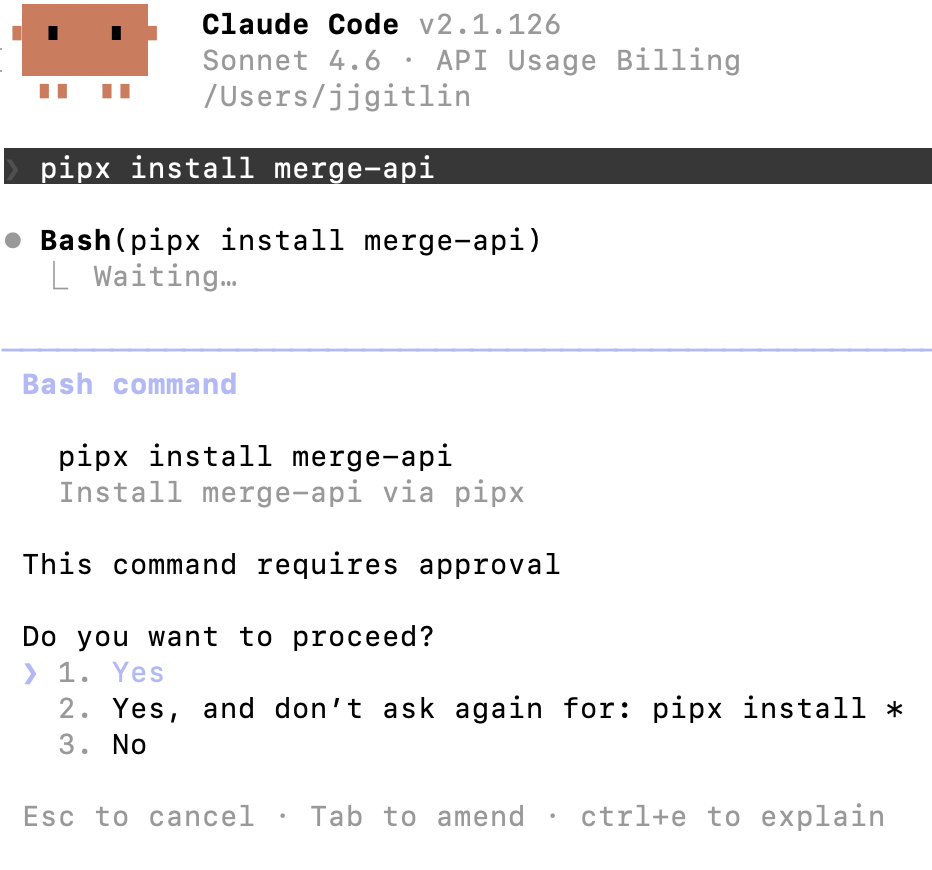
Then verify: merge --version
Related: How to use a BambooHR MCP in Claude Code
2. Configure the CLI and log in
This links the CLI to your Merge account and authenticates your session: merge login
Once logged in, the CLI is ready to make authorized requests on your behalf.
3. Add Agent Handler to Claude Code
The simplest way to register Agent Handler with Claude Code:
Alternatively, register manually:
Open Claude Code and run: /mcp
agent-handler should appear under Local MCPs with a connected status.

Related: A guide to connecting an Oracle HCM MCP to Claude Code
4. Authenticate HiBob
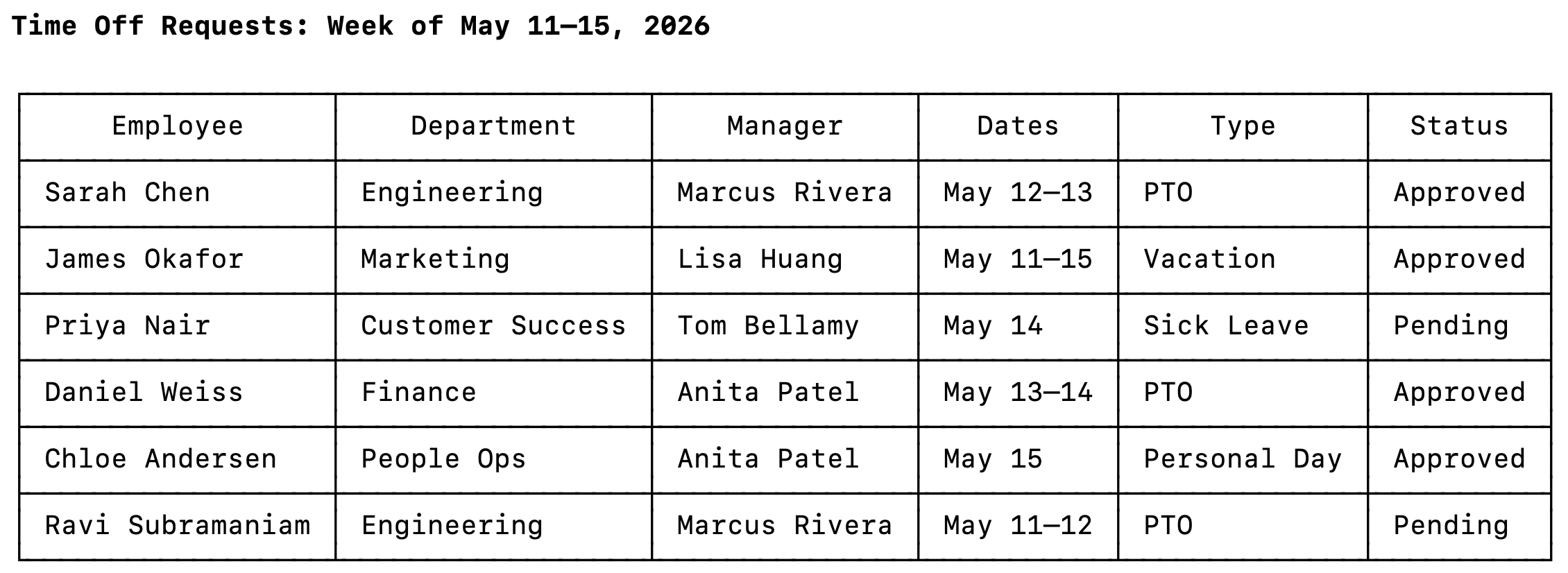
To confirm the connection is working, open a Claude Code session and try: "List all employees who have submitted time off requests for next week, including their manager and department."
On first use, a Magic Link will appear to finish connector authentication.
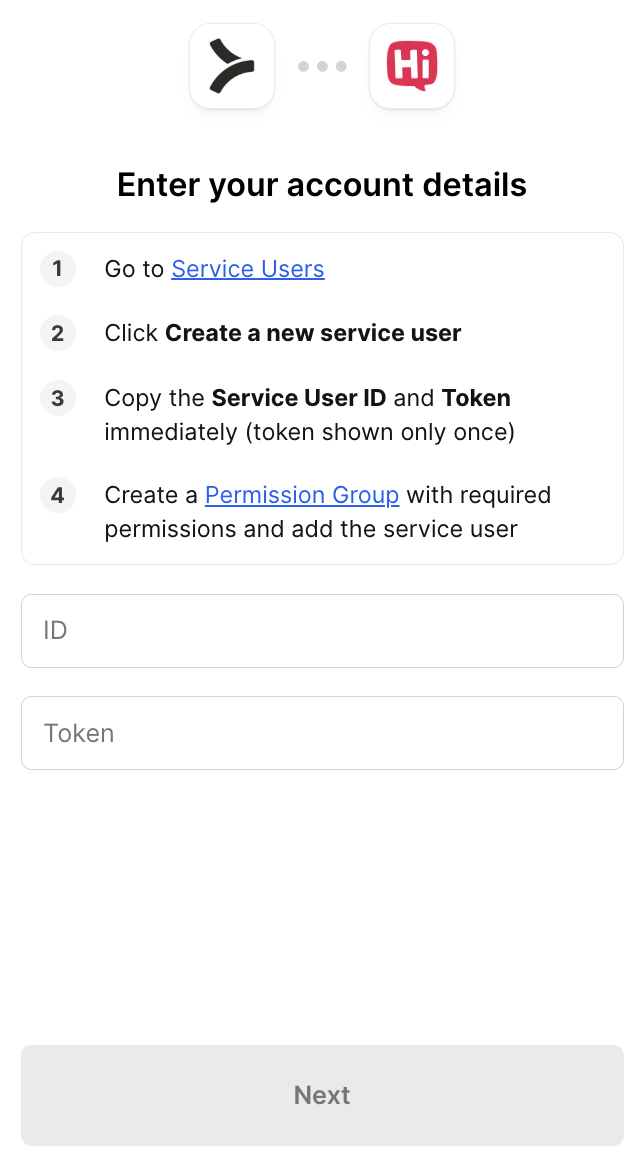
Once authenticated, you should see an output like the following:
{{this-blog-only-cta}}
HiBob MCP FAQ
In case you have more questions on setting up and using the HiBob MCP in Claude Code, we've addressed several more commonly-asked questions below.
What can you do once the HiBob MCP is connected to Claude Code?
With HiBob connected, Claude Code can:
- Query employee records: retrieve employee profiles including job title, department, manager, location, and employment status, filtered to a specific team or the full org
- Track time off: pull time-off balances, pending requests, and upcoming absences for individual employees or entire departments, including who is out today
- Surface org structure: retrieve reporting relationships and headcount by department, useful for planning agents that need current org data before generating summaries
- Manage onboarding tasks: list and complete onboarding task items assigned to new hires, enabling agents to drive task completion without requiring HR to check manually
- Access goals and performance data: retrieve employee goals and metadata, giving agents the context needed to surface progress or flag items that are behind
- Generate and download reports: trigger report generation and download outputs programmatically, useful for agents that need to deliver scheduled people ops summaries
Why use Merge Agent Handler vs. HiBob's official MCP server?
HiBob does offer an official MCP server in beta. If you're an individual developer experimenting with HiBob data in a local Claude setup, the official beta is a reasonable starting point.
The limitations show up in production.
Beta status means the server's tool surface, authentication model, and error behavior can change between releases without notice. Building an agent workflow on top of a beta MCP and shipping it to end users means absorbing those breaking changes as they come. There's also no field-level access control: the official MCP gives an agent access to whatever the authenticated user can see, with no mechanism for restricting which fields or endpoints a given agent can reach.
Merge Agent Handler adds the production-readiness layer on top of HiBob's data.
DLP controls let you block sensitive fields (e.g., compensation data) before they reach an agent, even when the underlying credentials have broad read access. You can also scope the HiBob tools a specific agent can call. A time-off reporting agent, for example, may access get_whos_out and get_time_off_balance, but not terminate_employee or upload_document_from_url. And you can log every tool call with the timestamp, tool name, and inputs.
Why connect HiBob to Claude Code?
HR teams and the developers who build on top of people ops data currently have to export CSVs, write scheduled queries, or build dedicated integrations every time a new workflow needs access to a different slice of that data.
With the HiBob MCP connected, Claude Code can query employee records, surface time-off data, and retrieve org structure without leaving the terminal.
This matters most when HiBob data needs to trigger or inform a downstream action: flagging a department where PTO coverage drops below a threshold before a peak period, generating an onboarding checklist for a specific new hire based on their role and location, or pulling a headcount snapshot for a workforce planning session. Developers get live access to HR data without rebuilding the same HiBob API client for each new use case.