

Table of contents
Just for you
No items found.
Why we started Merge



Shensi Ding
Some history
Gil and I met freshman year at Columbia, and have been best friends ever since. We were in all of the same Computer Science classes, and were Class President and Vice President of Engineering Student Council our senior year.
After going our separate ways after college, we both ended up at startups in San Francisco that ran into the same problem.

Shensi and Gil at Columbia University
As Chief of Staff at Expanse, I saw how integrations were a growing problem area brought up in executive syncs and sales meetings; in order to close more deals, we ended up hiring a full team of engineers just to focus on integrations. Meanwhile, as Head of Engineering at Jumpstart, Gil received an overwhelming number of requests from customers who wanted Jumpstart to integrate with their Applicant Tracking Systems. Building the first integration was a pain for Gil, but it was just the beginning. Prospective customers kept asking for more integrations, and maintaining existing integrations became extremely time-consuming.
During one of our weekly Sweetgreen dinners in San Francisco, I saw Gil and he looked terrible from working so much on these integrations. We started chatting about the similar problems with integrations that we were experiencing and realized that even though our companies were in completely different industries, there was one pressing problem that our companies shared — integrations were extremely expensive to build and maintain, but absolutely critical in order to grow and reach more customers.
The problem
Building and maintaining integrations impact the entire company, not just product and engineering.
- Sales teams struggle when deals are blocked because of a lack of integrations
- Partnership teams spend months trying to establish relationships with API providers in order to get access
- Product Management and Design has to research and plan the integrations, prioritizing one customer’s vendor over another
- Engineering has to build and maintain the integration, and help investigate whenever customers run into issues
- Customer success spends hours onboarding and supporting customers with integrations, and has to maintain documentation
This led us to discover the integrations problem: The average company now has ~90 vendors, and there is an increasing expectation for these vendors to integrate with one another. The development process alone is an impossible task for growing startups to accomplish.
The more companies we talked to and researched, the more we realized that this was a huge problem that affected almost every company in the B2B space. We were left wondering — why isn’t there anything out there that solves the integrations problem?
Why We Started Merge
We spent a lot of time thinking about what would be a solution 10x better than other products attempting to solve the same issue. Most of these platforms don’t solve the unique problems that B2B companies struggle with.
B2B integrations are higher stakes — B2B companies can’t afford to have a single negative customer experience.
Therefore, we focused on the following principles:
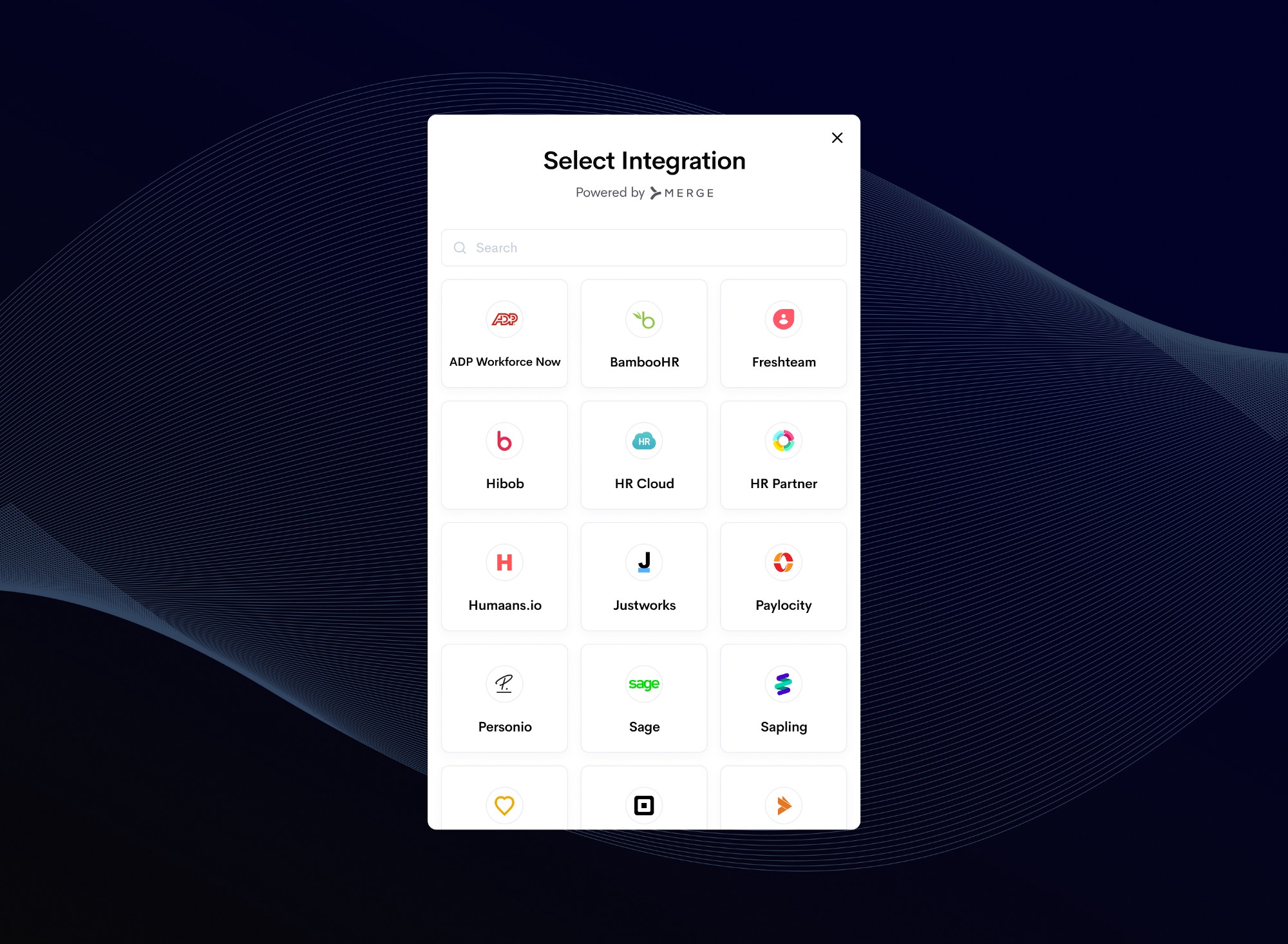
- Robust and High Quality Data — Our integrations are normalized into a unified API, which allows flexibility and agility in the development process. We extensively test our integrations because we understand how important data quality is.
- Built-in Integrations Management — Maintaining integrations can be extremely time-consuming but also mission-critical. We try to simplify the process by providing tools for customer success and engineering teams to be able to dig into and resolve customer issues and questions as quickly as possible.
- A High Emphasis on Security — We received our SOC2 Type II certification right out of the gate, and have prioritized security from the beginning in order to offer an enterprise-ready solution to our customers.
Where we are today
We’ve been lucky to work closely with great companies like PTO Genius, Benepass, TruePlan, Forage, and many more. The Merge team is excited to share additional news about the company, how we’ve worked with our customers, and how companies can use Merge to ship integrations faster and expand their customer base.
If you’re interested in checking out Merge, sign up here or email us at hello@merge.dev! We’re always happy to chat.
Shensi Ding

.png)


But Merge isn’t just a Unified
API product. Merge is an integration platform to also manage customer integrations. gradient text
But Merge isn’t just a Unified
API product. Merge is an integration platform to also manage customer integrations. gradient text
But Merge isn’t just a Unified
API product. Merge is an integration platform to also manage customer integrations. gradient text
But Merge isn’t just a Unified
API product. Merge is an integration platform to also manage customer integrations. gradient text